Sri Lanka
 USA
USA Canada
 India
India UK
UK UAE
UAE




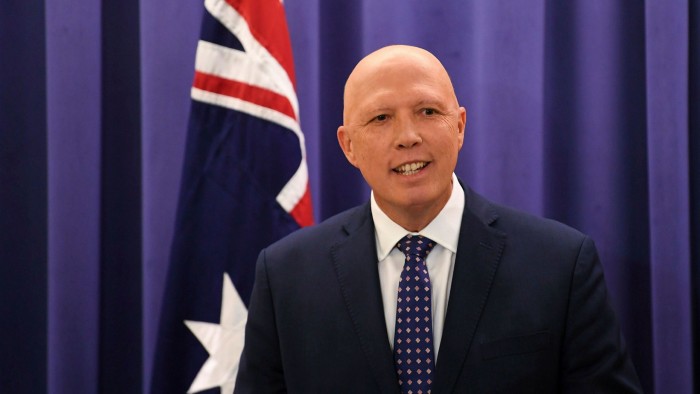
The Liberal Party of Australia holds the record for the most federal election victories and counts the nation’s two longest‑serving prime ministers among its ranks. Yet its origins and modern identity often raise questions—especially given its conservative policies under a “liberal” banner.
Humble Beginnings (1944–1949)
In 1944, Robert Menzies and fellow proponents of individual enterprise united to form the Liberal Party as a counterweight to Labor’s ties to organized labor. They aimed to represent self‑employed, middle‑class Australians—people Menzies called “the forgotten”—who felt neither unions nor big business spoke for them.
Five years later, in coalition with the Country Party, the Liberals won government and Menzies became prime minister. Under his leadership, the party championed small‑government economic management, social stability, and the interests of shopkeepers, professionals, farmers, and artisans.
Evolution and Reform
Although Menzies initially supported the White Australia Policy, his successors began dismantling race‑based immigration laws in the 1960s. Over subsequent decades, the Liberals solidified their reputation as the center‑right party, advocating free‑market reforms, individual choice, and lower taxes.
Classical Liberalism vs. Conservatism
Despite its name, the Liberal Party blends classical liberalism—favoring minimal state intervention—with social conservatism resistant to rapid cultural shifts. Inside the party, small‑“l” liberals (who distrust government) often clash with conservatives (who see a stronger state role) over issues from welfare reform to environmental policy.
Modern-Day Liberals
Today under Peter Dutton, the Liberals campaign for what they call a “smaller, quieter Australia”—emphasizing border control, tough‑on‑crime measures, and restrained public spending. Their 2025 platform pledges include building nuclear reactors, cutting wasteful programs, and reducing migration.
Key Achievements and Challenges
The party takes pride in opening up the economy, expanding university access, and enabling social mobility. Yet it grapples with internal tensions between its liberal roots and conservative wing, a dynamic as old now as it was at its founding.
As Australia heads into its next election under the slogan “Get Australia Back on Track,” the Liberal Party remains closer to its original free‑market, middle‑class focus than its Labor rival—continuing a political legacy that began 80 years ago.