Sri Lanka
 USA
USA Canada
 India
India UK
UK UAE
UAE




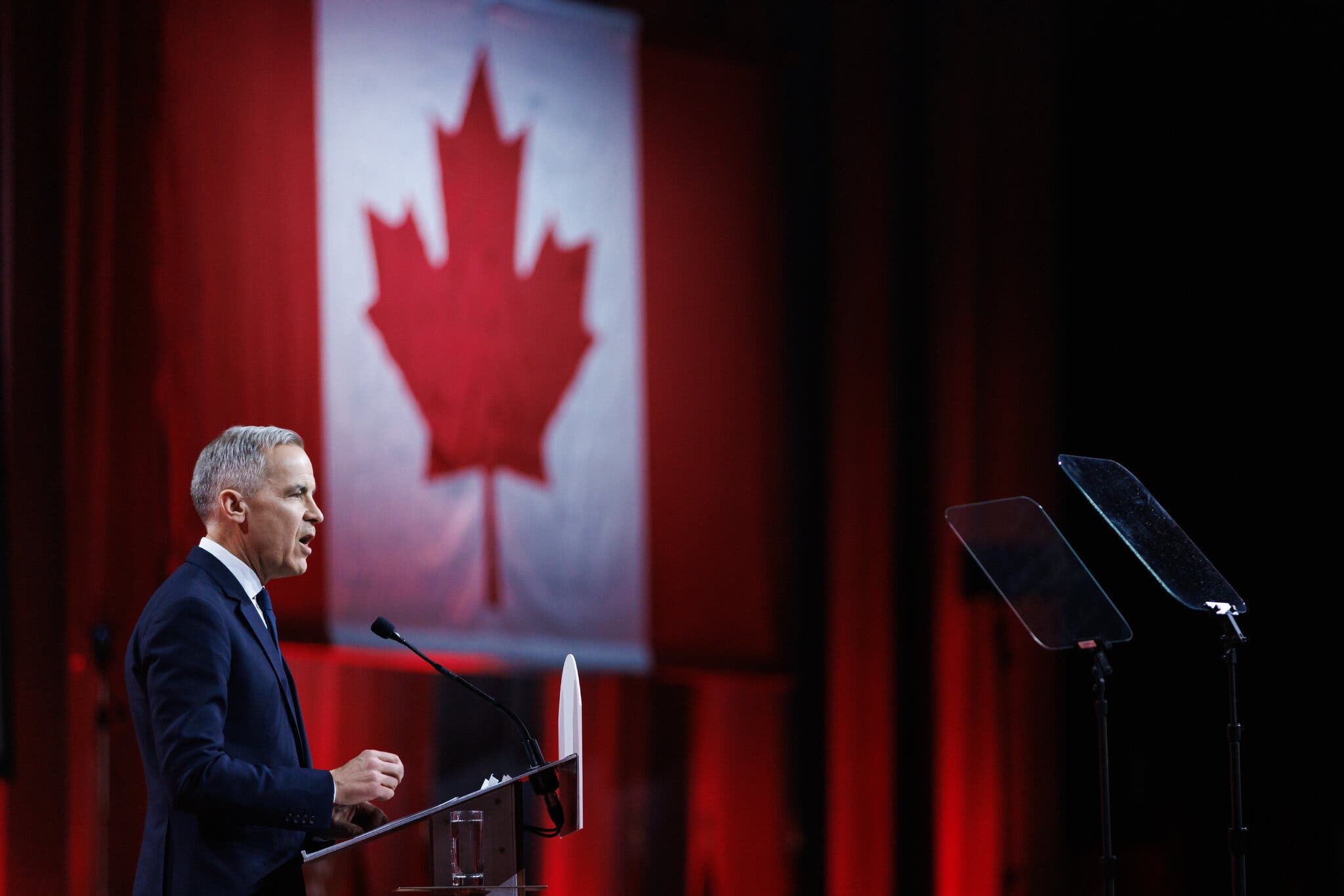
Mark Carney, Canada’s Prime Minister, is gaining surprising popularity in Quebec, despite struggling with French and limited understanding of the province. His perceived competence in handling President Trump’s aggressive policies is shifting political tides in his favor.
Despite his awkward French and minimal familiarity with Quebec culture, Prime Minister Mark Carney has become an unexpected favorite in the province. Traditionally, Quebec voters prize fluency in French and a strong grasp of local history and customs. However, many are setting those standards aside, viewing Carney as the most capable leader to confront President Trump and his destabilizing influence.
Carney’s appearance on Quebec’s widely watched talk show, Tout le Monde en Parle, highlighted his struggle to name a single element he liked about the province—be it a singer, city, cheese, or cultural feature. Still, rather than turning voters off, the moment illustrated how Carney’s shortcomings in language are being overlooked during a volatile election season dominated by international tensions.
Until recently, the Bloc Québécois was poised for major success in the April 28 federal election. Now, Carney’s Liberal Party holds a commanding lead in Quebec. Analysts point to Trump’s tariffs and rhetoric as the driving force behind the shift. Carney’s background as former head of both the Bank of Canada and Bank of England positions him, in the eyes of many voters, as the most qualified candidate to manage Canada’s relationship with its southern neighbor.
Even staunch Bloc supporters are reconsidering. In the Bloc stronghold of Sainte-Thérèse, retired roofer Yves Lefebvre admitted he might vote Liberal this time, despite Carney’s language issues. “He seems competent,” Lefebvre said. “I don’t care if he speaks only English.”
Carney’s performance in a recent two-hour French-language debate exceeded expectations, though his French was graded a D+—the lowest among the candidates. Still, media coverage declared the debate a draw, with some outlets even calling Carney the winner simply for holding his own.
Historically, Ontario has been seen as the kingmaker in federal elections due to its population and parliamentary weight. However, Quebec remains critical for securing a majority. Carney’s gains there reflect a broader realignment driven by voters’ growing anxieties about U.S. policies.
Bloc leader Yves-François Blanchet has expressed visible frustration over Carney’s surge, accusing him of not caring about Quebec. Yet, many Bloc voters now believe Quebec’s cultural identity might be better preserved within Canada than risked under a hypothetical U.S. annexation.
Marie-Noëlle Closson Duquette, a Bloc candidate in Thérèse-De Blainville, initially felt confident of victory. Now, she’s witnessing voter priorities shift dramatically toward international issues, particularly Trump’s tariffs.
Quebecers’ cultural pride remains strong, but practical concerns are increasingly eclipsing linguistic ones. Carney’s clumsy attempts at integration—like misidentifying Quebec dishes or bungling names—are being met with good humor rather than scorn. In one memorable moment, he mispronounced the squeaky cheese sound in a poutine, drawing laughs rather than criticism.
Crucially, Carney’s willingness to learn and improve resonates with many. “I’m from Alberta. I’m 60 years old. I can still learn,” he remarked in a recent interview. His humility and effort, paired with an economic track record, are winning hearts.
Retired insurance adjuster Pierre-André Champagne, a longtime Bloc voter, summed up the new sentiment: “I feel more Canadian because of Trump.” For the first time, he’s planted a Canadian flag in his yard—and plans to vote Liberal.
#MarkCarney #QuebecPolitics #CanadaFederalElection #TrumpTariffs #BlocQuebecois #FrenchLanguagePolitics #CanadianIdentity