Sri Lanka
 USA
USA Canada
 India
India UK
UK UAE
UAE




Emotional backlash and shifting loyalties mark Canada’s response to new U.S. tariffs
Canadian small businesses are voicing growing frustration and disillusionment in the wake of sweeping tariffs imposed by former U.S. President Donald Trump. While the intent of these measures is to bolster American manufacturing and recalibrate global trade, many entrepreneurs north of the border are taking the move personally — seeing it as a blow to a historically strong and cooperative economic relationship.
The U.S. and Canada have long been intertwined economically. In 2024 alone, trade between the two countries amounted to $762.1 billion, with Canada sending over 75% of its exports to its southern neighbor. But Trump’s administration introduced a 10% tariff on Canadian energy and 25% on other goods, including automobiles and auto parts. While some items under the United States-Mexico-Canada Agreement were exempted, the wide-reaching levies have sparked both economic disruption and emotional fallout.
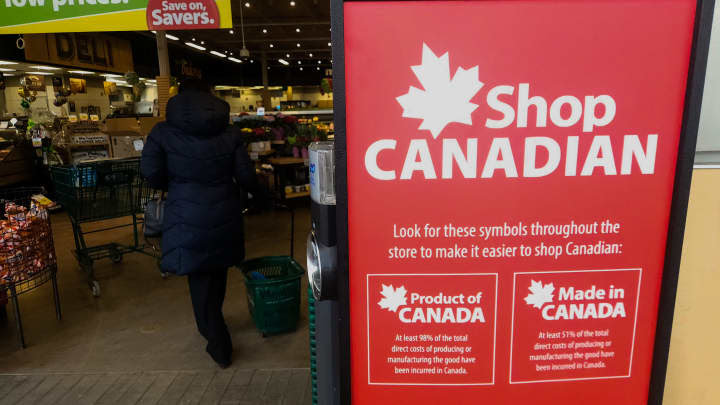
Canadian businesses are responding with more than just retaliatory tariffs — they are taking symbolic stances. Ontario’s Balzac’s Coffee Roasters, for instance, renamed its Americano drink to the “Canadiano” to reflect national pride. Your Independent Grocers now labels items with a maple leaf to signal “Prepared in Canada” and uses a “T” logo to indicate products affected by tariffs.


According to Corinne Pohlmann, executive vice president of the Canadian Federation of Independent Business (CFIB), over half of the group’s 100,000 members report feeling that the U.S. is no longer a reliable trade partner. Nearly a quarter have seen increased demand for Canadian-owned goods, as public sentiment begins to shift toward domestic loyalty.
“Emotionally, it felt like a betrayal,” said Pohlmann, noting that many small businesses are struggling with the rising costs and seeking ways to renegotiate U.S. contracts.
Some institutions have made bold statements. The Liquor Control Board of Ontario (LCBO) stopped stocking U.S. products from March 4, placing signs in stores explaining the absence of familiar American goods such as California wines and Tito’s Vodka.
Still, exceptions exist. LCBO clarified that Coors Light — though owned by U.S.-based Molson Coors — remains on shelves if brewed in Canada. “Our beers are generally made in the markets where they are sold,” said Molson Coors Senior Director Rachel Gellman Johnson.
Beyond the economic damage, experts warn of deeper diplomatic consequences. Former U.S. Secretary of State Antony Blinken expressed concern about the erosion of American “soft power” — the ability to lead through influence and trust. As Canadian businesses reconsider partnerships and contracts, this strain may prove difficult to reverse.
Even if tariffs are lifted, Pohlmann believes the fracture may be permanent. “The trading relationship between Canada and the United States has been fractured and may never be the same again,” she said.